Overview
Concerns over the sustainability of the AI revolution overwhelmed market sentiment in October.
The S&P 500 lost .87%. The Nasdaq Composite cratered 5.28%, while the Russell 2000 (small cap index) rose .58%.
Internationally, rising oil prices and a strengthening USD added to this bleak environment and contributed to a series of negative performances. The EPAC BM Index International developed economies) lost 2.10% while the MSCI EM (emerging markets) dropped 8.11%.
US equity losses were mostly the result of concerns about the economic returns to be expected from the massive capital investments needed to build the AI infrastructure. Those concerns manifested themselves in the form of a rotation away from the tech sector and more generally, out of the riskiest parts of the market, as illustrated below:
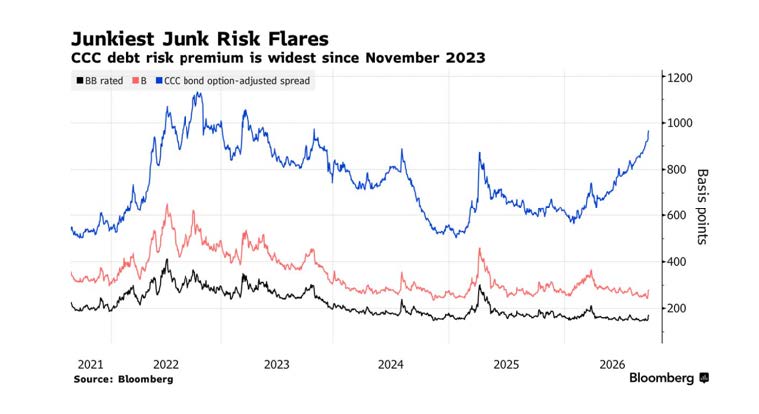
When market sentiment turns bearish, all sorts of assets are dumped. Junk bonds, as illustrated above, offer one such example. On the other hand, US Treasuries and investment grade bonds tend to benefit.
In October, US fixed income markets rebounded as a risk-off mood settled in. The US bond aggregate gained 2.44%. Investment grade corporate bonds rose 2.16%, while high yield corporates increased a smaller .30% and the long bond jumped 5.16%.
Our median portfolio gained 1.21% this past month. Over the same period, a portfolio consisting of 50% ACWI (All Country World Index) and 50% AGG (US Bond Aggregate) rose .29%. Overall, our median portfolio is up 5.84% YTD (Year-To-Date) vs. 5.22% for our benchmark.
Market developments
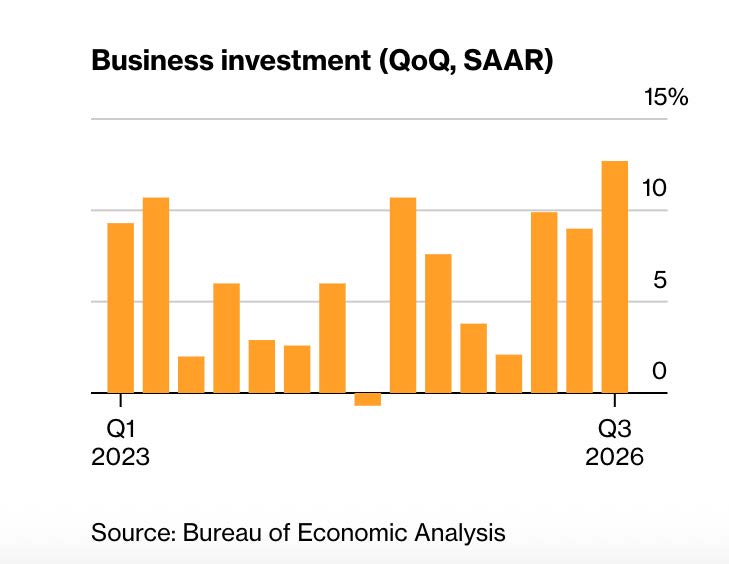
The US economy remains sturdy overall. Business investments are robust, as illustrated below:
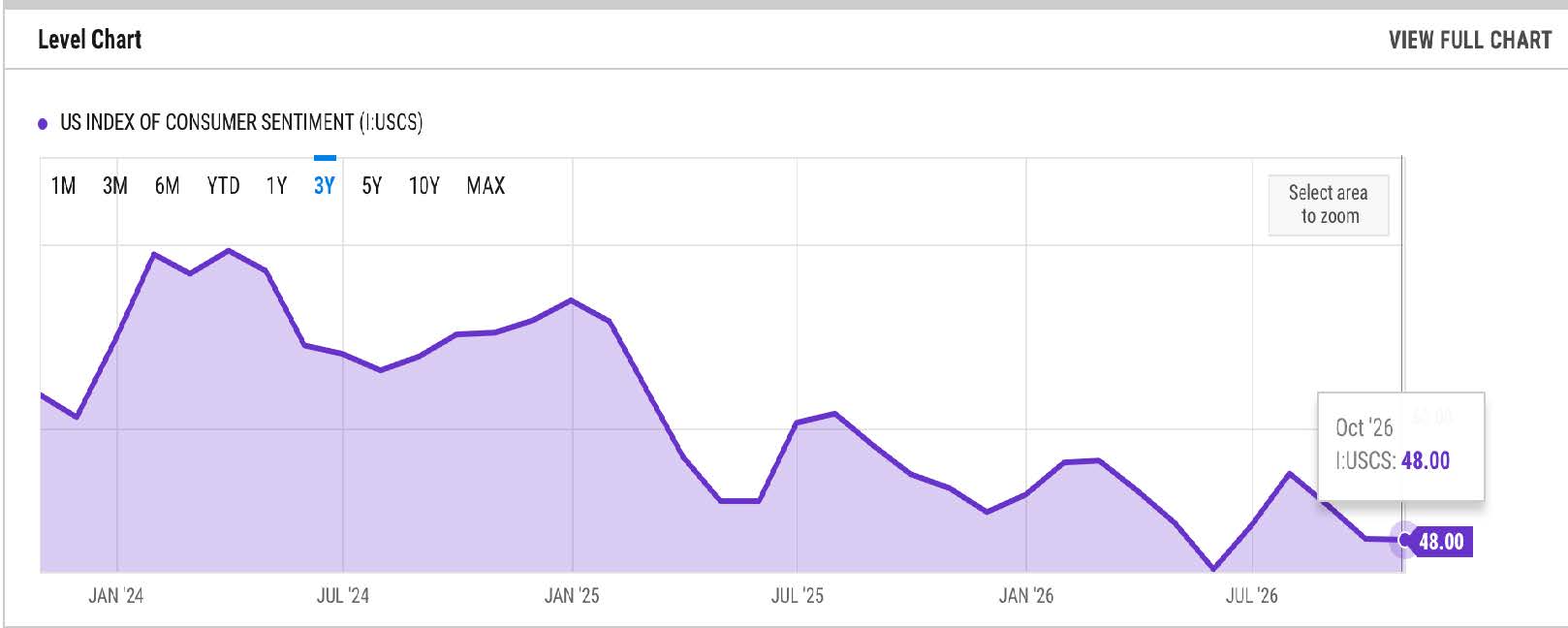
On the other hand, inflation remains above the FED’s long-term target, running at 3.7% (year over year) as of the end of October, and consumer confidence remains low overall. As shown below:
In this context, the FED decided at the end of the month to keep the fed funds rate unchanged, between 3.75% and 4.00%. There is a chance that this (lack of) decision will cause it to be “behind the curve” in its fight against inflation. That said, I can understand the FED governors’ resistance to a fed fund hike just two weeks before a major electoral event.
Looking ahead, the mid-term elections results combined to the status of the war with Iran will determine the market trend over the coming days and weeks.
Portfolio Commentary
Continued anxieties about oil prices, geopolitical conditions and the astronomical AI spend, all contributed to market unease in October. This unease expressed itself in a significant rotation out of tech and into safer equity sectors. As illustrated below:
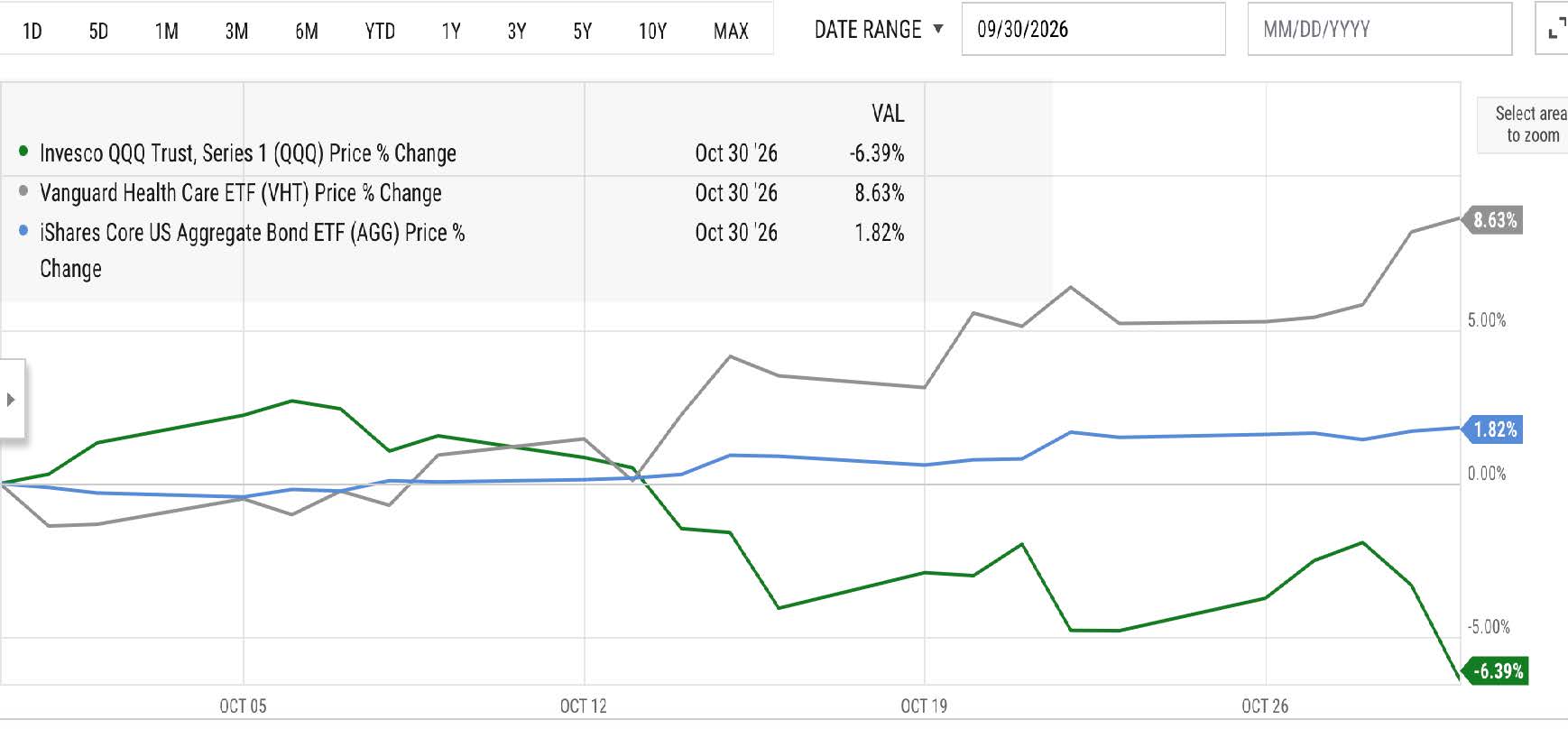
In October, the tech sector (green line) went down 6.39% while, over the same period, VHT (health care ETF-Grey line) was up 8.63% and AGG up 1.82%, as both benefitted from a risk-off mood.
We started a position in VHT in August and added to it in September and October and were able to capitalize on this rotation. Additionally, we lightened up on our investment in IEFA, the international developed market ETF, due to continued hostilities in the Middle East and a rising USD.
Separately, valuations remain high overall and rising bond yields are starting to compete with equities for investors’ attention, as illustrated below:
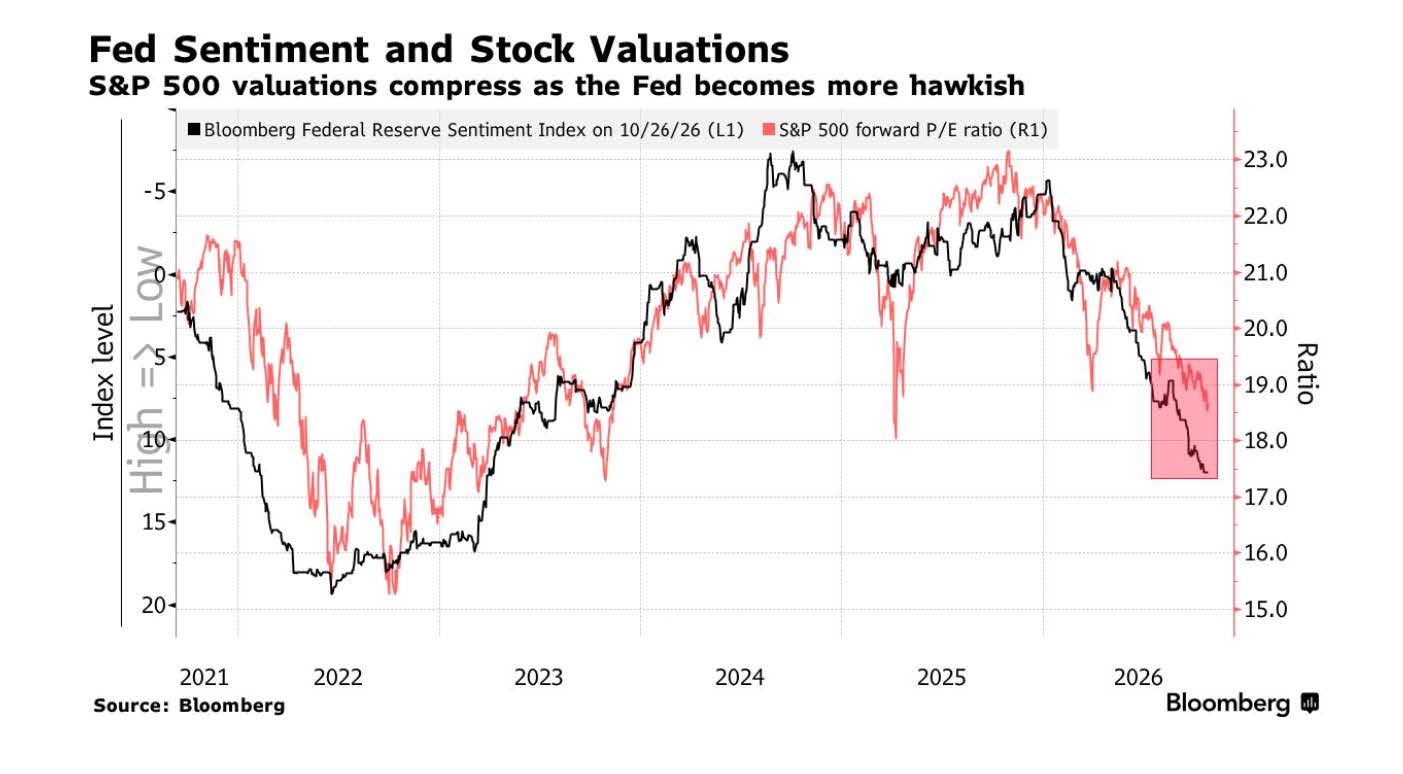
As the FED’s interest rate stance becomes more restrictive (dropping black line), equity valuations drop.
In that environment, the only durable support for equities is an increasing earnings growth rate. The double-digit growth rates enjoyed by many corporations over that past two years cannot be sustained and will slow in the coming months. And with that slowdown, a likely market swoon will ensue.
Whether this market “adjustment” has started remains to be confirmed. The signs that it has are accumulating.
Conclusion
With a possibly meaningful alteration of the political landscape in the coming days in the US, continued hostilities with Iran and a rising interest rate environment, overall conditions are deteriorating for equities. We should know more about how all of this will impact markets in the coming days and weeks.
One thing to keep in mind though is the resiliency of the US economy. It gives me some hope that any market correction, if there were to be one, would be limited to its most volatile and overvalued sectors.
Thank you for your continued trust.
Jeff de Valdivia, CFA, CFP
Fleurus Investment Advisory, LLC
www.fleurus-ia.com
(203) 919-4980